Shed Pad Prep with Land Clearing and Drainage in Crown Point
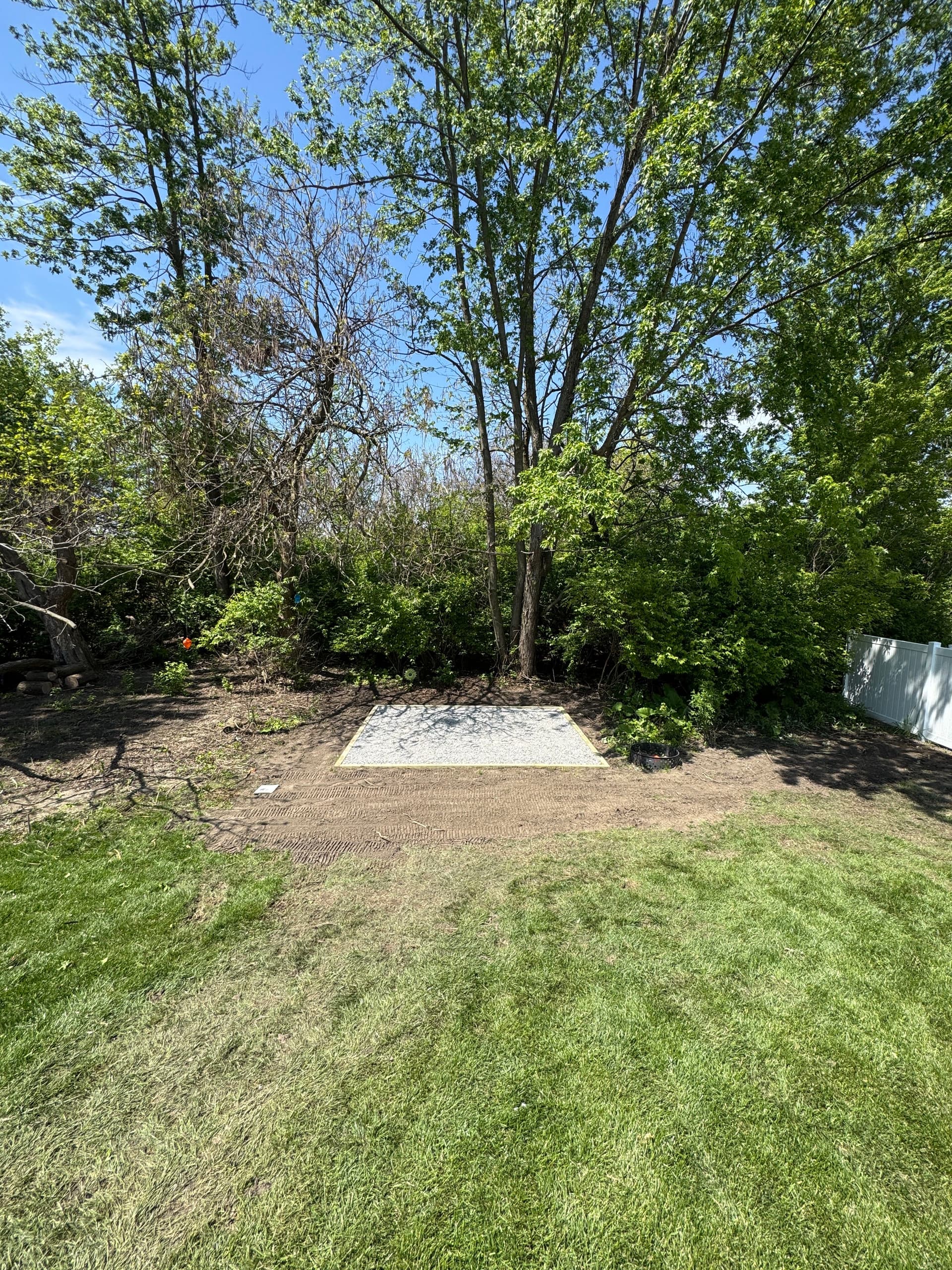
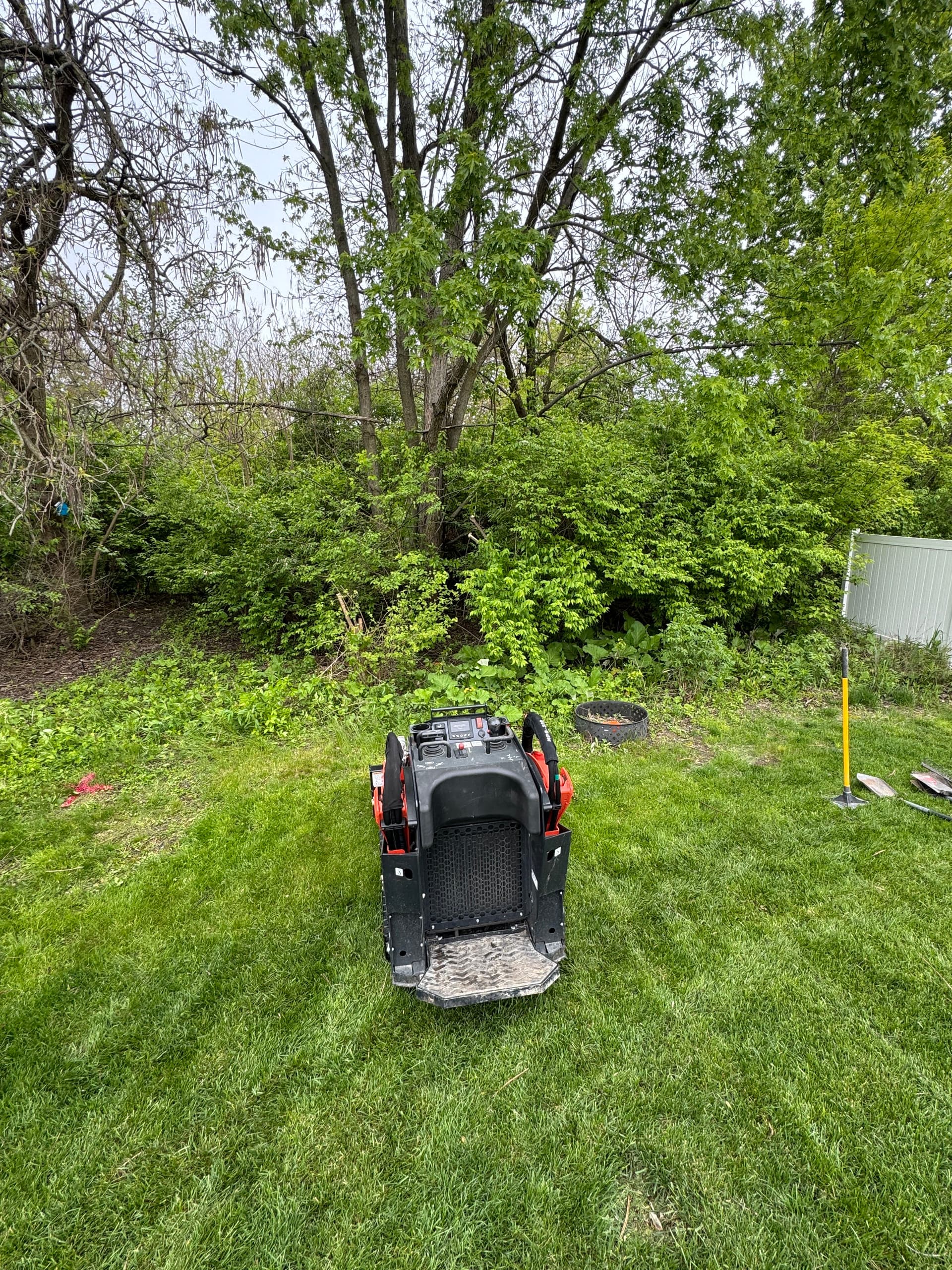
A lot of people skip the prep work when putting in a shed. They set it on soft ground, skip drainage, and then wonder why the floor is rotting two years later. Getting the ground right from the start is the only way to do it correctly.
Here's what we were working with - a heavily overgrown back corner with dense brush and no usable space. We brought in a compact track loader to clear it out and get down to bare ground. That kind of equipment lets us work efficiently without tearing up the rest of the yard in the process.
Once the area was cleared, we focused on the base itself. A properly compacted gravel pad gives the shed a stable, level surface that won't shift or settle with the seasons. We also put in simple drainage to move water away from the pad. That step alone prevents a lot of long-term problems - pooling water under a shed foundation is one of the main reasons structures fail early.
This is the kind of work that doesn't always get talked about, but it makes a real difference. A shed sitting on a well-drained, solid base is going to hold up far longer than one dropped on bare dirt. The land clearing, grading, and drainage all work together - you can't really separate them if you want a result that lasts.
Whether you've got a brushy corner that needs to be opened up or you're trying to figure out where water keeps coming from, these are problems we deal with all the time. Good prep work is what separates a solid outdoor structure from a headache waiting to happen.